
How Nomads Preserve Meat Without Refrigerators
6/4/20262 min read
How Nomads Preserve Meat Without Refrigerators
For centuries, nomadic families in the Sahara have used a simple but effective method: sun-drying meat.
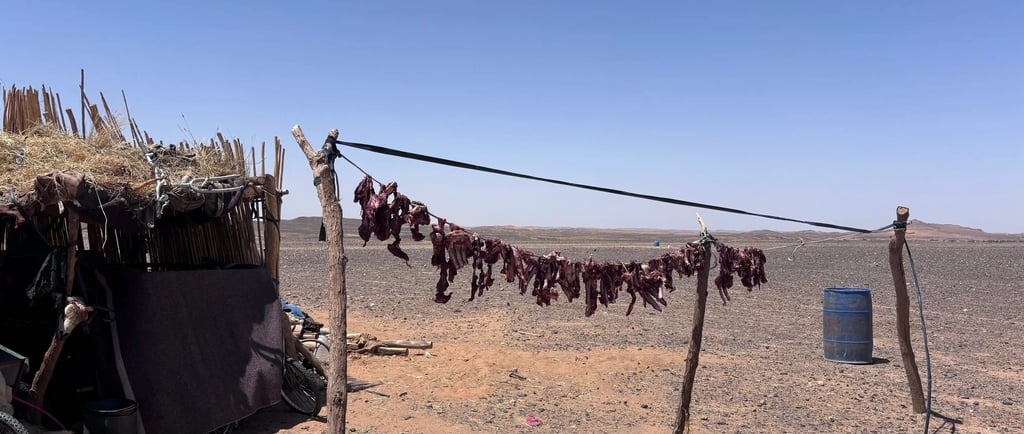
After slaughtering a sheep or goat, the meat is cut into thin strips, lightly salted, and hung on ropes or wooden structures outside the tent. The combination of:
Intense Sahara sunshine
Very low humidity
Constant desert breeze
Salt as a natural preservative
helps remove moisture from the meat, preventing spoilage.
Over several days, the meat gradually dries and can be stored for weeks or even months.
The Moroccan Tradition of "Gueddid"
In Morocco, this preserved meat is known as Gueddid (or Kadid). It is especially common after Eid al-Adha when families have more meat than they can consume immediately. Once fully dried, the meat is:
Stored in cloth bags or containers
Added to tagines and soups throughout the year
Used to flavor traditional dishes
Sometimes preserved further with animal fat
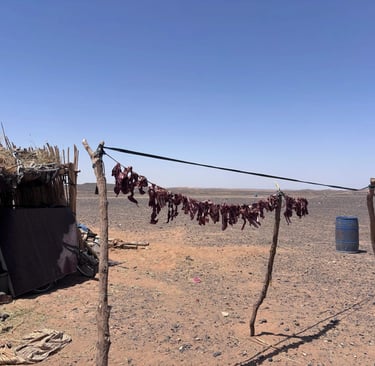
The photograph captures an authentic moment of desert life near Merzouga just one day after Eid al-Adha. The fresh strips of meat hanging outside the nomadic shelter are beginning the drying process.
A Desert Tradition: Preserving Meat Without Refrigeration
One day after Eid al-Adha, visitors on our Merzouga 4x4 excursion often witness a remarkable tradition that has been practiced by Sahara nomads for generations. In this photograph, strips of freshly prepared meat hang under the open desert sky, beginning a natural preservation process that has helped families survive in one of the world's harshest environments.
Without refrigerators or modern storage facilities, nomadic families rely on the power of the Sahara itself. The dry desert climate, intense sunshine, and constant breeze work together to remove moisture from the meat, transforming it into a preserved food known locally as Gueddid. This traditional method allows families to store meat for long periods while maintaining its nutritional value.
For centuries, preserving meat in this way was not simply a cultural custom—it was a necessity. Living far from markets and towns, nomads needed reliable food reserves that could withstand the extreme desert conditions. The knowledge was passed from one generation to the next and remains an important part of desert heritage today.
During our visit to local nomadic families, travelers have the opportunity to learn about these ancient traditions firsthand. Seeing meat drying naturally in the Sahara provides a fascinating insight into how people adapted to life in a remote and challenging environment long before modern conveniences existed.
This simple scene tells a powerful story of resilience, sustainability, and traditional knowledge that continues to survive in the Moroccan Sahara, offering visitors a rare glimpse into an authentic way of life that has changed very little over the centuries.